Ookla: twice as many US Starlink users hit 100/20 Mbps in early 2026
On Sep 15, 2026, Broadband Breakfast reported Ookla's H1 2026 data: twice as many US Starlink users met the FCC's 100/20 Mbps benchmark as a year earlier.
We may earn a referral reward from a link on this page. How we make money.
What changed
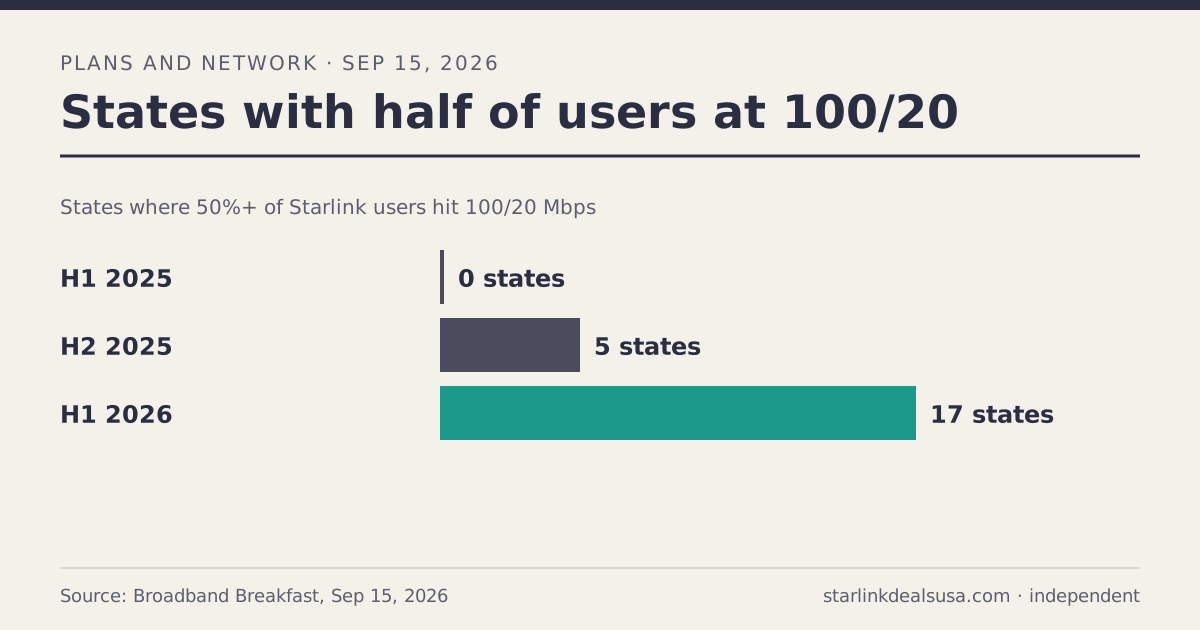
Ookla's US broadband performance report for the first half of 2026, as reported by Broadband Breakfast on Sep 15, 2026, found that Starlink's share of users reaching the FCC's 100/20 Mbps broadband benchmark roughly doubled in a year. Ookla's state-level data shows the jump clearly: no state had half its Starlink users at 100/20 in H1 2025, five did in H2 2025, and 17 did in H1 2026.
The best-performing states were South Dakota (58.2% of Starlink users at 100/20) and Nebraska (57%), followed by Colorado, Wyoming and Minnesota, each above 55%.
Wired broadband still leads by a wide margin: in 46 states plus D.C., at least 60% of fixed-broadband users met the same 100/20 benchmark.
"Starlink's broadband performance improved sharply during the first half of 2026"
Who it affects
Shoppers deciding whether a promo price is worth it. Speed data is the other half of value: a cheap first month on a slow connection isn't a deal.
Rural households comparing Starlink against DSL or fixed wireless, especially in the Plains and Mountain states where Starlink scored best.
Anyone on the 100 Mbps Residential plan: that plan caps download speed at 100 Mbps, so a 100/20 result is the most it can show.
What you can do now
Before buying, run your own speed expectations against the plan you're choosing; a promo on the 100 Mbps tier caps you at 100 Mbps no matter what Ookla's medians say.
Use the 30-day return window as your test period. Our fine print page explains what the return covers.
What hasn't changed
Prices didn't change because of this report, and the plan speed caps are the same: the 100 Mbps and 200 Mbps Residential plans are still capped at those speeds.
Context
Ookla measures what people actually get, not what a plan promises. That makes it useful for judging a deal: a promo is only good value if the service is good where you live. The state rankings line up with where Starlink has run most of its regional discounts, rural areas with spare capacity, though Ookla doesn't tie the two together and neither do we.
The 100/20 benchmark matters beyond shopping. The FCC uses it to define broadband, and federal broadband funding programs use similar thresholds when deciding what counts as served.
What we don't know yet
- How speeds will move once Starship-launched V3 satellites (first deployed Sep 28, 2026) enter service.
- How speeds hold up in surcharge areas, where cells are busiest; state medians hide local congestion.
- Ookla data comes from people who choose to run Speedtest, which isn't a random sample.
Source
- Primary: Ookla: Starlink performance surged in first half of 2026 (Broadband Breakfast), Sep 15, 2026. Retrieved Oct 6, 2026.
"Retrieved" is the date we read the source. A secondary source is a news outlet or industry site, not Starlink itself; we say so in the text where it matters.
Updates and corrections
No updates or corrections since publication. Spotted an error? Tell us; fixes are dated and kept here.